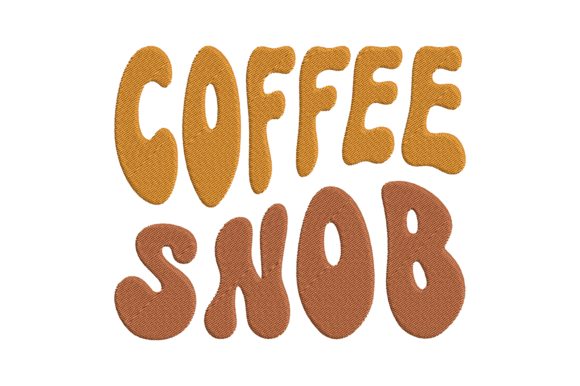
Coffee Snob Embroidery Design
First Impression: Charming, Confident, and Craft-Fair-Ready
As an embroidery designer who’s prepped over 200 craft fair booths—from Portland pop-ups to Nashville maker markets—I opened Coffee Snob expecting whimsy. What I got was sharper: a design that balances cheeky personality with clean execution. Despite its placement in the Tea category (a quirk worth double-checking for SEO alignment), Coffee Snob reads instantly as bold, modern, and just a little sassy—ideal for handmade product buyers who value wit alongside craftsmanship. It’s not farmhouse-cute or minimalist-soft; it’s confident, slightly irreverent, and visually compact—exactly the kind of machine embroidery design that stops booth browsers mid-aisle.
Where Coffee Snob Shines on Craft Fair Products
Coffee Snob thrives where personality meets utility. On a natural canvas tote bag? Perfect—centered above the pocket or scaled to wrap the side seam, it adds instant character without overwhelming. As apron embroidery? A standout on the chest pocket or lower left corner—especially on linen or medium-weight cotton blends. For tea towel embroidery, it holds up beautifully when placed near the hem or corner, avoiding dense stitching that could stiffen the fabric during repeated washing.
It’s also a smart choice for embroidered patches—clean lines and moderate detail translate well to iron-on or sew-on formats, making it easy for customers to personalize jackets, backpacks, or denim. On structured caps, test placement carefully: the lettering and icon must sit cleanly across the curved front panel. Small fabric pouches and pillow covers benefit most when Coffee Snob is used at 3–4 inches wide—large enough to read, small enough to preserve delicate proportions. As a market bag or giftable handmade item, it elevates perceived value: this isn’t generic—it’s curated, intentional, and conversation-starting.
Real-World Visibility & Online Performance
This design works hard both in-person and online. At a craft fair, Coffee Snob catches eyes fast—not because it’s loud, but because it’s legible, expressive, and emotionally resonant (“Yes, I *am* a coffee snob”). That same clarity makes it strong in Etsy listings and printable mockups: clean edges, balanced negative space, and distinct letterforms photograph crisply even on mobile screens. Unlike overly intricate designs, Coffee Snob doesn’t require zooming to appreciate—and that’s critical for scroll-happy shoppers.
It’s highly repeatable for batch production. Whether you’re running 12 tote bags or 50 tea towels, consistency stays high—provided you verify stitch density and thread tension first. Its scale flexibility means one digital embroidery file can serve multiple product types without redesigning, saving time and preserving brand cohesion across your small shop product lineup.
Careful-Use Notes for Embroidery Business Owners
Don’t skip testing—especially if you’re using textured towels, dark fabrics, or thick stabilizer layers. Tiny details (like fine stems or narrow letter serifs) may blur on terry cloth or low-thread-count cotton. On curved surfaces like caps, confirm spacing between elements holds up under stretching. If your version includes small script or tight kerning, avoid scaling below 2.5 inches—legibility drops sharply, and customers won’t pay premium prices for unreadable charm.
Dense stitch areas—common in shaded icons or tightly packed lettering—can cause puckering on lightweight fabrics or stiffening on soft linens. Always check thread contrast: light gray thread on oatmeal linen reads warm and sophisticated; the same thread on charcoal duck canvas may disappear. And remember—Coffee Snob’s appeal hinges on precision. A slightly crooked “o” or uneven fill stitch breaks the illusion of handmade quality, even if the rest is flawless.
Design Assets That Build Booth Strength & Buyer Trust
In your physical display, Coffee Snob strengthens booth identity. Group it across complementary products—tote + matching tea towel + embroidered patch—and you signal intentionality, not randomness. Customers subconsciously equate that consistency with professionalism and care. When they see the same well-executed motif on three different items, they trust your eye, your process, and your ability to deliver finished product reliably.
For Etsy sellers and digital embroidery file creators, Coffee Snob is a versatile anchor design. Bundle it with coordinating tea- or kitchen-themed assets, and you build a mini-collection that encourages add-on sales. Used thoughtfully in social media reels or booth signage, it becomes part of your maker voice—not just decoration, but brand punctuation.
Essential Embroidery Designer Checks Before Production
Before cutting fabric or loading hoops, run these checks:
- Test the Coffee Snob embroidery file on scrap fabric matching your target product—linen for tea towels, twill for aprons, canvas for totes.
- Verify thread colors against your base fabric under both daylight and booth lighting.
- Review spacing between letters and graphic elements—tight gaps may merge in stitching.
- Confirm hoop size compatibility with your machine and intended product (e.g., cap frames vs. standard hoops).
- Inspect stitch density—especially around curves and interior cutouts—to avoid excessive buildup.
- Use the right stabilizer: tear-away for stable wovens, cut-away for knits or stretchy blends.
- Create at least one real mockup—not just a digital preview—before committing to full production.
- Compare how Coffee Snob looks on light vs. dark fabric swatches to guide inventory decisions.
- Confirm commercial licensing terms—this is non-negotiable for selling finished product, especially for Etsy sellers and boutique makers.
If exact stitch count, recommended hoop size, or file format aren’t stated in the product listing, contact the designer or vendor before purchase. Never assume compatibility—your reputation rides on clean, consistent results.
Final Thought: Coffee Snob Is More Than a Design—It’s a Sales Signal
In a sea of floral motifs and generic quotes, Coffee Snob says, “I know my audience—and I respect their taste.” It’s not background decor. It’s a handshake, a wink, a shared inside joke between maker and buyer. When executed with attention to fabric, thread, and context, it transforms ordinary handmade products into memorable craft fair keepsakes—and that’s exactly what turns browsers into loyal customers.