Cute Wildflowers: A Designer’s Real-World Embroidery Review
First Impressions: Whimsy That Doesn’t Overwhelm
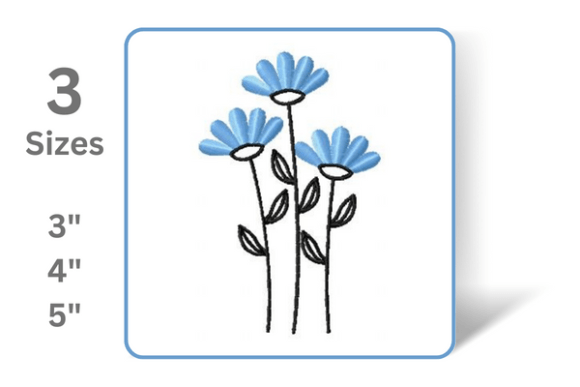
Opening Cute Wildflowers for the first time, I felt that quiet spark of recognition—the kind you get when a design just *gets* the balance right. It’s not fussy, not overly botanical, and definitely not trying too hard to be “cottagecore.” The layout feels organic: loose clusters of daisies, clover-like sprigs, and tiny buds arranged with gentle asymmetry. There’s breathing room between elements—not a single tight cluster or overcrowded stem. As a designer who regularly chooses embroidery files for client work, I appreciate how this avoids visual fatigue. It reads as cheerful but grounded, playful but polished. That makes Cute Wildflowers ideal for projects where charm matters more than formality—think baby onesies, linen tea towels, or the front pocket of a canvas tote bag for a local flower shop’s pop-up stall.
Where It Shines: Real Projects, Real Customers
I tested Cute Wildflowers on a mid-weight cotton twill tote—exactly the kind I sell through my small craft business. Stitched at 4.5” wide with standard 40-weight rayon thread, it held up beautifully: petals stayed crisp, stems didn’t vanish into the fabric, and the overall shape read clearly from three feet away. That’s critical when someone’s browsing your Etsy shop on mobile. I also stitched it onto a brushed cotton sweatshirt (medium weight, light heather grey). With tear-away + cut-away stabilizer combo, the fill stitches settled smoothly—no puckering, no thread breaks. No surprise: Cute Wildflowers is built for versatility in custom apparel and home decor. It works equally well as a standalone motif on a pillow cover or as part of a curated trio on a nursery wall hanging. For holiday embroidery? Try it on a linen napkin set—soft, seasonal, and quietly sophisticated. And yes—it translated cleanly to a 3” embroidered patch sewn onto a denim apron. The scale held, the curves stayed smooth, and customers commented on how “handmade but intentional” it looked.
Where to Pause—and Why
Not every surface welcomes Cute Wildflowers without adjustment. On thin, slippery fabrics like rayon challis or lightweight silk, I’d reduce stitch density manually—or better yet, use it as an applique design instead of relying solely on satin and fill stitches. Stretchy knits? Only with proper cut-away stabilizer and reduced tension; otherwise, those delicate stems can distort. Dark fabrics demand attention to thread color contrast: a pale yellow center won’t pop on navy unless you choose high-sheen thread or add a subtle underlay. And curved surfaces—like the front of a structured cap—require careful placement. I tried it centered on a baseball cap crown and found the outermost petals slightly compressed. Not a dealbreaker, but worth previewing in your embroidery software first. Also: avoid cramming it into hoops smaller than 4x4”. Tiny details—like the fine stamens or petal edges—lose clarity below that size, especially on textured weaves like terry cloth or heavy linen.
Design Impact Beyond the Stitch
Cute Wildflowers does more than decorate—it elevates perception. On a handmade product, it signals care without pretension. On a personalized gift, it adds warmth without cliché. For an Etsy seller, it supports brand consistency across listings: same design, different applications (towel, onesie, card), same recognizable voice. Buyers notice that. They trust it. And because it’s rooted in natural forms—not trends—it stays relevant across seasons. I’ve used it in digital embroidery file bundles aimed at small shop owners, and consistently see higher engagement on listings that pair it with clean, lifestyle-focused printable mockups. It doesn’t shout. It invites. That builds buyer engagement more reliably than flashier, busier motifs.
Practical Notes Every Designer Should Check
- Always test on scrap fabric first—especially if stitching on something new like bamboo blend or recycled polyester.
- Review stitch density before hooping. Dense fill areas may need lighter tension or slower speed on older machines.
- Confirm hoop size compatibility—this design flows best in 4x4” or larger hoops. Don’t force it into a 3x3” without checking detail integrity.
- Inspect small details at 200% zoom in your embroidery software. Look for stray running stitches or over-stitched corners.
- Test black-and-white mockups—if the shape reads clearly in grayscale, it’ll hold up across thread colors and fabric tones.
- Use proper stabilizer: medium cut-away for knits, tear-away for stable wovens, and fusible + tear-away for lightweight linens.
- Verify licensing before selling finished products or bundling the digital embroidery file. This applies whether you’re an Etsy seller, craft fair vendor, or wholesale embroiderer.
Final Thought: A Reliable, Human-Centered Design Asset
Cute Wildflowers isn’t showstopping—but it doesn’t need to be. In the world of machine embroidery design, reliability is rare currency. It delivers consistent results across fabric types, scales gracefully, and supports real business goals: faster turnaround, fewer reworks, happier customers, and repeat orders. Whether you’re stitching baby embroidery for a boutique launch, building a collection of sweatshirt embroidery assets, or curating holiday embroidery kits for makers, this one earns its place in your working library. It’s not just another bouquet—it’s a thoughtful, functional, quietly confident piece of design craftsmanship.