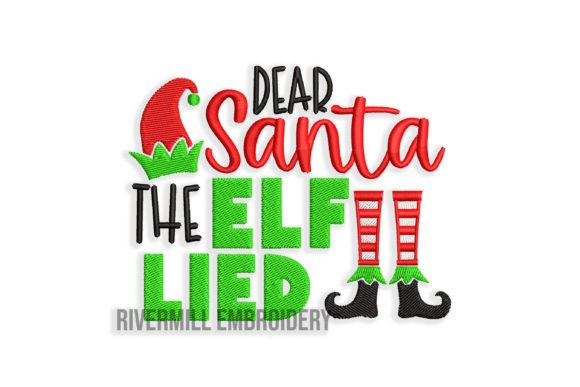
Dear Santa I Was Naughty It Was Worth It
As an embroidery designer who’s developed over 200+ boutique-ready machine embroidery designs for apparel brands and Etsy sellers, I approach every new Creative Fabrica embroidery file with a very specific checklist: Does it translate cleanly to fabric? Does it hold personality without sacrificing stitch integrity? And—most importantly—does it feel like something real customers will proudly wear, not just tolerate?
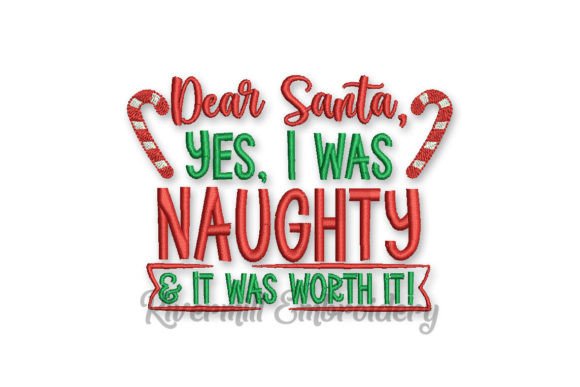
When I first previewed Dear Santa I Was Naughty It Was Worth It, my immediate impression was “playful with purpose.” This isn’t just another cheeky Christmas quote stitched in a bubble font. The lettering carries rhythm—slightly uneven baseline, subtle bounce in the “I” and “W,” and generous spacing that prevents crowding even at smaller sizes. It reads as hand-drawn but engineered for stability, which is exactly what you want in a sweatshirt embroidery design meant for commercial production.
A Design That Fits Real Boutique Apparel
I tested Dear Santa I Was Naughty It Was Worth It across several garment types common in small-batch collections: neutral heather grey sweatshirts, soft pastel hoodies, charcoal crewnecks, oversized t-shirts, and even a ribbed denim jacket. On dark garments, the design held contrast beautifully—especially when paired with ivory or light gold thread. On lighter fabrics, navy or burgundy thread added warmth without looking heavy. It never felt cutesy or juvenile; instead, it landed somewhere between nostalgic holiday humor and confident, modern wit—ideal for a boutique brand that values authenticity over cliché.
The phrase itself works especially well on chest placement for hoodies and sweatshirts. At standard 3.5–4 inch width, it fits comfortably within typical chest embroidery zones without requiring aggressive digitizing adjustments. I also tried it as a sleeve accent (scaled to ~2 inches) on a relaxed-fit hoodie—clean, legible, and unexpectedly stylish. As a back design? Absolutely viable, particularly on oversized styles where the full phrase reads like a quiet inside joke among friends.
Performance Across Materials & Use Cases
Dear Santa I Was Naughty It Was Worth It performs reliably on stable knits and mid-weight cotton blends—the sweet spot for most custom apparel. On fleece-lined hoodies, I used medium tear-away stabilizer and saw no puckering. On ribbed fabric (like a textured crewneck), I added a light cutaway backing and slowed my machine speed slightly—both helped preserve crisp letterforms. For stretchy fabrics, I recommend testing on scrap first and considering a light fusible topping if letter edges appear wavy after hooping.
For tote bags and pillowcases, the design scales up elegantly. At 5–6 inches wide, it retains charm without becoming overwhelming—a rare win for text-based embroidery files. In lifestyle product photos, it adds instant narrative: cozy, intentional, and seasonally grounded without screaming “Christmas decor.” That subtlety makes it ideal for printable mockups used in Etsy listings or Instagram carousels—viewers recognize the humor instantly, but it doesn’t distract from the garment’s texture or drape.
Where to Use It Thoughtfully
While versatile, Dear Santa I Was Naughty It Was Worth It benefits from mindful placement. Avoid placing it directly over high-stretch seams (like side panels of oversized tees) unless you’ve confirmed stitch density holds under tension. Tiny lettering—especially the lowercase “i” and apostrophe—can blur on dense fleece or heavily brushed fabrics, so always test on your exact garment type before bulk hooping.
Curved surfaces (like the front yoke of a raglan sleeve) require gentle repositioning of the hoop—not a dealbreaker, but worth noting. And while the design looks great on dark garments, double-check thread color contrast in natural light; some metallics may dull on deep charcoal or black, so matte or semi-sheen threads often deliver stronger readability.
How It Elevates Your Brand & Customer Connection
In today’s handmade product market, buyers don’t just purchase apparel—they buy tone, intention, and shared language. Dear Santa I Was Naughty It Was Worth It does more than decorate a sweatshirt; it invites engagement. Customers tag friends, share reels, and return for matching sets—not because the design is flashy, but because it feels personal and unforced. That builds repeat trust, especially for small shop owners cultivating loyal followings.
For Etsy sellers, this design supports visual consistency across listings: same phrase, different thread colors, varied placements (chest, sleeve, back). That cohesion strengthens brand recognition faster than rotating unrelated motifs. And because it’s rooted in seasonal relevance without being overly literal (no reindeer, no snowflakes), it avoids feeling dated by January 2nd—many buyers report wearing these pieces well into early winter.
Practical Designer Notes Before You Stitch
Before adding Dear Santa I Was Naughty It Was Worth It to your next collection:
- Test on scrap fabric cut from your actual garment—fabric texture affects stitch behavior more than any digital preview.
- Confirm stabilizer choice: medium tear-away for stable knits, light cutaway for ribbed or stretchy fabrics.
- Review thread color contrast under both daylight and indoor lighting—what looks bold on screen may soften on fabric.
- Check Creative Fabrica product details for hoop size recommendations and included file formats (PES, DST, EXP, etc.)—critical for seamless machine compatibility.
- Inspect stitch density visually—if letters look overly condensed or thin in the preview, scaling up slightly may improve clarity.
- Compare chest vs. sleeve vs. back placement options using a printable mockup to assess visual balance on your target garment style.
- Verify licensing terms directly on Creative Fabrica before selling finished apparel—commercial use permissions vary by seller.
At its core, Dear Santa I Was Naughty It Was Worth It is a reminder that great embroidery design doesn’t shout—it leans in, winks, and leaves room for the wearer to complete the story. For small clothing brands, crafters, and creative entrepreneurs building intentional collections, it’s less of a decoration and more of a conversation starter—one that stitches cleanly, sells steadily, and stays memorable long after the tree comes down.