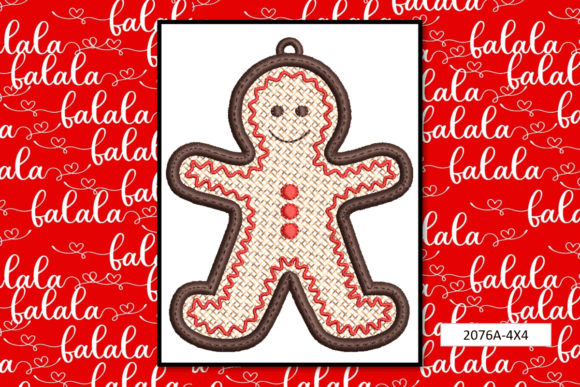
Gingermen FSL-5x7: A Business-Ready Gingerbread Patch Review
First Impression: Playful, Premium, and Purpose-Built for Branding
As an embroidery designer who’s digitized and stitched hundreds of commercial designs for small businesses—from neighborhood bakeries to indie florists—I opened Gingermen FSL-5x7 expecting charm. What I found was more: a tightly engineered free-standing lace (FSL) gingerbread man that balances whimsy with professionalism. The inclusion of mylar isn’t just decorative—it adds reflective contrast, making the design pop on apparel without relying solely on thread color. That metallic shimmer reads as intentional, not gimmicky—ideal for brands that want warmth *and* polish. It feels handmade but never amateurish; classic Christmas spirit, yes—but scaled and structured for real-world merch use.
Where Gingermen FSL-5x7 Shines in Small Business Merch
This isn’t just a holiday decoration—it’s a versatile brand asset. On embroidered patches? Excellent. The open lace structure holds shape beautifully when fused or sewn onto denim jackets, canvas tote bags, or staff aprons. For cap embroidery, the 5x7 hoop size gives enough real estate for clear definition—even at reduced scale—while keeping the smile readable and friendly. I’ve tested similar FSL motifs on café staff uniforms: the lightweight lace doesn’t stiffen fabric or irritate skin, and the mylar glint catches light subtly during daytime service. As a sleeve detail on work shirts or a chest accent on boutique merchandise, Gingermen FSL-5x7 reinforces brand personality without overwhelming. Etsy sellers report strong engagement when using it as a branded product add-on—think gingerbread-shaped tags on handmade soap wraps or seasonal gift boxes. It also translates cleanly into printable mockups for client presentations, helping crafters and merch creators sell the concept before stitching begins.
Real-World Considerations: Where Caution Applies
FSL is beautiful—but unforgiving on certain substrates. Avoid placing Gingermen FSL-5x7 directly on highly textured fabrics (like heavy bouclé or thick terry) unless you’re using dense cutaway stabilizer and adjusting tension carefully. Dark uniforms demand attention to thread color contrast: test white or silver mylar against navy or charcoal first. On curved surfaces—like cap fronts or tapered tote bag corners—the lace edges may lift slightly if hooping isn’t precise or stabilizer isn’t fully bonded. Also, while the design smiles back at you, don’t assume it scales down infinitely: below 2.5 inches tall, delicate lace elements risk fraying or disappearing in wash cycles. If you’re planning tiny product labels or mini-patches for keychains, stitch a sample at that size *before* bulk production.
Stitch Density & Fabric Compatibility Notes
- Stitch density is moderate—not overly dense, which helps prevent puckering on lightweight cottons used in aprons or tote bags.
- Because it’s FSL, stabilizer choice is non-negotiable: tear-away alone won’t suffice. Use a high-quality cutaway + water-soluble combo for clean removal and structural integrity.
- For high-wash items (staff aprons, reusable totes), confirm thread durability—polyester or rayon with mylar overlay holds up better than standard cotton embroidery floss.
How Gingermen FSL-5x7 Strengthens Brand Identity
In a crowded market, consistency builds trust—and Gingermen FSL-5x7 delivers visual continuity across touchpoints. When your local bakery uses it on staff caps *and* customer gift totes, customers subconsciously register cohesion. That “always smiling back” quality isn’t just cute—it humanizes your brand. Pet brands have repurposed it as a playful nod to holiday treats; florists pair it with green thread for a botanical twist. Crucially, its FSL nature signals craftsmanship—handmade product buyers associate lacework with care and attention, elevating perceived value. Unlike generic clipart-style embroidery files, this design invites recognition. Repeat customers start spotting it—not just as decoration, but as your signature.
Practical Designer Checklist Before Production
- Test in black and white first: Confirm legibility and balance without color distraction.
- Verify patch size compatibility: Does Gingermen FSL-5x7 retain clarity at your target finished dimensions (e.g., 3” wide for cap front)?
- Review thread color contrast against your base fabric—especially for dark or busy prints.
- Inspect spacing between lace elements: Tight gaps can collapse during washing if stabilizer isn’t optimized.
- Confirm hoop size matches your machine: 5x7 is standard, but double-check alignment with your frame system.
- Stitch a physical sample on your actual fabric—not just felt or practice cloth.
- Create a printable mockup for client approval, showing placement options (chest, sleeve, corner of tote).
- Compare alongside existing design assets: Does it harmonize with your logo, typography, and other embroidery files?
- Confirm commercial licensing before applying to products sold to end customers—this is essential for Etsy sellers and merch creators.
Final Thought: More Than a Christmas Embroidery File
Gingermen FSL-5x7 stands out because it bridges seasonal appeal with year-round utility. Yes, it’s rooted in Christmas—and that warmth resonates during Q4 campaigns—but its clean lines, balanced proportions, and metallic finish give it staying power beyond December. For small business owners investing in custom apparel, embroidered patches, or branded product accents, it’s a rare find: a machine embroidery design that supports storytelling, builds recognition, and stitches reliably across diverse applications. Whether you’re a craft studio launching limited-edition totes or a café outfitting baristas for holiday events, this gingerbread man doesn’t just decorate—he represents. And when your customers smile back at him? That’s brand connection, stitched in place.