Quilt Block 13b: A Craft Fair-Ready Embroidery Design
First Impression: Timeless, Textured, and Booth-Ready
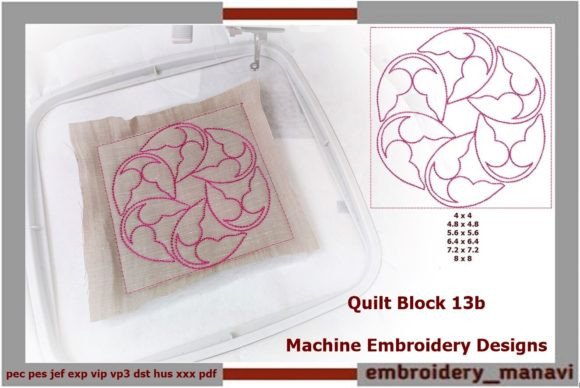
Quilt Block 13b lands with quiet confidence—not loud, not fussy, but deeply intentional. It reads as farmhouse-meets-modern-craft: clean geometry softened by trapunto’s gentle puff, a quilt block square that nods to tradition without leaning into nostalgia overload. For craft fair sellers, that balance is gold. It doesn’t scream “look at me!”—it invites touch, leans into handmade warmth, and fits seamlessly beside linen aprons, stoneware mugs, and hand-dyed tea towels. It feels premium, not precious; approachable, not generic.
Where Quilt Block 13b Shines on Real Products
This isn’t a one-trick design—it scales with intention. On a tote bag design, centered just below the handles, Quilt Block 13b becomes an anchor: substantial enough to read from three feet away, detailed enough to reward closer inspection. As apron embroidery, it works beautifully on the bib or lower pocket—its square format aligns naturally with apron structure, and trapunto adds tactile dimension that stands out against busy market crowds.
For tea towel embroidery, it’s a standout. Woven cotton towels love trapunto’s subtle lift—no flattening, no thread snagging. Place it in the lower corner or center-hem, and it transforms a utilitarian item into a giftable handmade product. As an embroidered patch, Quilt Block 13b holds up remarkably well at 3–4 inches: crisp lines, balanced negative space, and stitch density that won’t buckle or pucker when fused or sewn on.
On curved surfaces like caps, proceed with care—trapunto needs room to breathe, so avoid crowns or tight seams. But on flat-panel items—pillow covers, small pouches, and market bags—it delivers consistent impact. And for Etsy sellers? Quilt Block 13b photographs exceptionally well: soft shadows from trapunto translate beautifully in natural light, and its square shape composes cleanly in listing grids and printable mockups.
Production Reality Check: What You Need to Know Before Cutting Fabric
Quilt Block 13b is a thoughtful machine embroidery design—but it’s not “set-and-forget.” Its trapunto layer introduces real production variables. Here’s what matters:
- Dense stitch areas cluster near seam lines and inner block outlines—test on your target fabric first. Heavy stabilizer is non-negotiable for textured towels or thick canvas.
- Tiny details exist in the quilting motifs within the block—don’t shrink below 3.5 inches unless you’ve verified clarity on scrap. At smaller sizes, those fine lines blur, especially on dark fabric.
- Hoop size and stitch density directly affect stability—check your embroidery file metadata before batching. If your hoop is tight, repositioning may be needed for larger versions.
- Fabric texture changes everything. Smooth cotton poplin? Ideal. Loosely woven linen or terry cloth? Add cutaway + tear-away combo stabilizer—and expect slight variation in trapunto height.
Selling Smarter: Booth Impact & Buyer Psychology
In a crowded craft fair aisle, Quilt Block 13b earns attention by feeling intentional. It signals craftsmanship—not just decoration. Customers pause because it looks like something made with care, not mass-produced. That perception lifts perceived value: a $28 tea towel with Quilt Block 13b sells more confidently than one with a generic floral motif.
It also strengthens brand consistency. If your small shop product line centers on quiet luxury or modern heirloom style, Quilt Block 13b reinforces that story across tote bags, aprons, and pillow covers—without repeating the same motif. And for booth display? Mount one finished sample on corkboard with natural twine, pair it with raw fabric swatches and thread spools, and you’ve created instant storytelling.
Designer-to-Designer Notes: Don’t Skip These Steps
Before you load Quilt Block 13b into your commercial embroidery machine or list it as a digital embroidery file:
- Test the design on scrap fabric—same type, same color, same stabilizer you’ll use in production.
- Check thread contrast carefully. Trapunto relies on tonal shifts—light thread on cream linen reads differently than navy on black cotton.
- Review spacing between elements. Tight gaps can cause thread nesting or skipped stitches on dense runs.
- Confirm hoop size compatibility—especially if offering multiple sizes (e.g., 4x4, 5x7, 6x6).
- Inspect stitch density in the trapunto fill. Overly dense fills increase breakage risk and heat buildup.
- Use the right stabilizer—cutaway for stretchy or unstable fabrics, tear-away for stable wovens, and always fuse stabilizer before hooping for towels.
- Create at least one real mockup—not just a digital preview. See how light hits the puff, how it drapes, how it feels in hand.
- Compare fabric colors side-by-side under daylight and warm bulb lighting—some creams turn yellow, some greys go blue.
- Confirm commercial licensing before selling finished products. Since this is a digital embroidery file labeled for machine use, verify usage rights apply to your business model.
Final Thought: Quilt Block 13b Is a Quiet Workhorse
It won’t trend on TikTok overnight—but it will sell steadily at craft fairs, convert browsers into buyers on Etsy, and earn repeat orders from boutique makers who value substance over flash. As a House category embroidery design, it belongs in kitchens, studios, and gifting collections—not as filler, but as foundation. It’s the kind of machine embroidery design that makes customers say, “I need this for my coffee nook,” or “My sister would *love* this on her market bag.” That’s the quiet power of Quilt Block 13b: understated, versatile, and unmistakably handmade.